
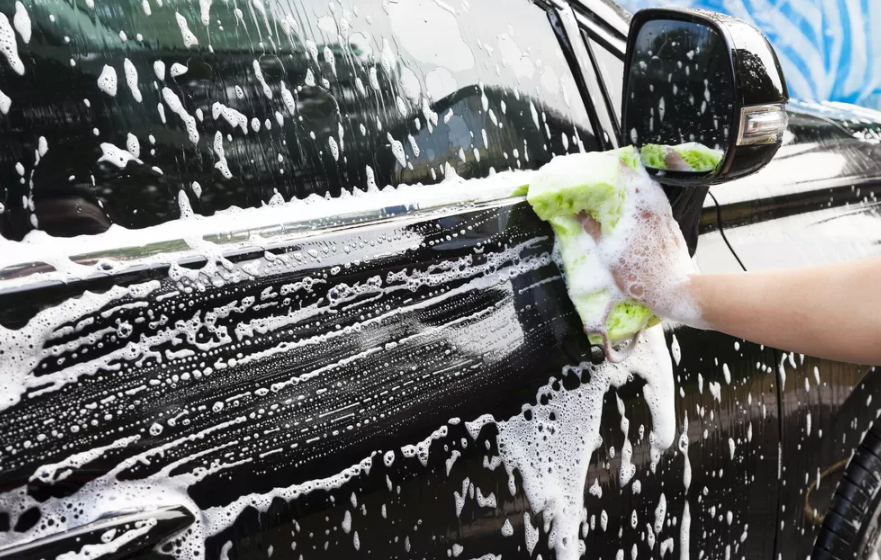
No maintenance routine can eliminate Arizona exposure, but poor washing and long periods of baked-on contamination can shorten the useful life of a wrap. Treat the film as a professional exterior finish rather than ordinary paint.
Use a gentle hand-wash routine.
- Rinse loose dust and grit before touching the surface.
- Wash with cool or lukewarm water, mild automotive soap and a soft clean mitt.
- Work from the top down and avoid aggressive scrubbing at seams or edges.
- Rinse thoroughly so soap does not dry on the film.
- Dry with clean microfiber towels or allow a spot-free rinse to drain.
Pressure washing requires restraint.
Hand washing is preferred. If pressure washing is unavoidable, use lower pressure, a wide fan pattern and substantial distance. Never aim directly into an edge, seam, lifted area or damaged section. Excessive heat and concentrated pressure can force water beneath film.
Remove contaminants promptly.
Bird droppings, bug residue, tree sap, fuel and road chemicals can stain when left in the sun. Soften the contamination with a wrap-safe cleaner and wipe gently. Do not scrape with a blade or use an unknown solvent.
Shade is valuable in Phoenix.
Horizontal surfaces such as roofs and hoods receive especially intense exposure. Covered parking, shade and keeping the vehicle clean can help. Any protectant must be specifically compatible with the exact wrap film and finish; matte and textured films may require different products.
When to call the installer
Ask for guidance if you see lifting, damaged edges, deep scratches, bubbling or a panel affected by collision repair. Small issues are easier to evaluate before dirt and water work farther beneath the film.